Asafoetida,Asafoetida Hing - Asafoetida Powder and Raw Asafoetida Manufacturer and Exporter, best hing manufacturers, asafoetida manufacturers, asafoetida supplier, exporter, Manchanda Brothers, Delhi | India





Spices
Hing
Havan Samagri
reliable hing manufacturers for food businesses
What Makes a Reliable Hing Manufacturers for Food Businesses?
If you run a food business — whether a spice brand, restaurant chain, food processing unit, or export house — sourcing hing from the right hing manufacturers can make or break your product quality. Hing (asafoetida) is one of those ingredients that sounds simple but is anything but. Its purity, aroma strength, and consistency directly affect the end product that lands in your customer's kitchen.
And yet, too many buyers find themselves stuck with suppliers who overpromise and underdeliver — inconsistent quality, poor packaging, no documentation, and zero accountability when things go wrong.
This guide breaks down exactly what separates reliable hing manufacturers from the unreliable ones. Whether you're sourcing for the first time or switching vendors, these are the markers that matter.
Why Your Choice of Hing Manufacturer Matters More Than You Think
Hing is not a commodity you can treat as interchangeable. Two bags labelled "compound hing" from different manufacturers can smell completely different, behave differently during cooking, and produce entirely different results in your product.
For food businesses, the stakes are high. Imagine launching a packaged dal or a masala mix, only to receive customer complaints that "the smell is off" or "the batch tastes different from last time." That's a quality sourcing problem — and it traces back to the manufacturer.
Choosing the right hing manufacturers gives you:
• Consistent aroma and flavour profile across every batch
• Proper documentation for food safety audits and export compliance
• Flexibility in pack sizes and private labelling
• A supply chain partner who won't disappear when you scale
7 Qualities That Define a Trustworthy Hing Manufacturer
1. Valid Food Safety Certifications (FSSAI, ISO, Export Licences)
This is non-negotiable for any serious food business. A reliable hing manufacturer must hold a valid FSSAI licence at minimum. For businesses that export, checking whether the supplier holds Export Inspection Council (EIC) approval and APEDA registration is equally important
ISO 9001:2015 certification is the current standard — not the older 2008 version, which expired in 2018. If a manufacturer is still citing ISO 9001:2008, that's a red flag worth noting.
Always ask for certificates, not just claims. A trustworthy supplier will hand them over without hesitation.
2. Raw Material Sourcing Transparency
Genuine asafoetida (raw hing) is predominantly imported from Afghanistan and Iran, where Ferula plants grow naturally. Top hing manufacturers are transparent about their sourcing — they can tell you the origin country, the resin grade, and whether the raw material is direct-import or procured through intermediaries.
The quality of raw hing directly determines the final product's potency. Lower-grade resin means weaker aroma, and no amount of processing can fix that. Ask potential suppliers about their raw material quality checks before committing to any order.
3. In-House Manufacturing vs. Trading
There's a major difference between a company that actually manufactures hing and one that simply trades or relabels it. In-house hing manufacturers give you traceability, consistency, and the ability to customise — something a trader simply cannot offer.
Ask to see the manufacturing facility. Reputable suppliers will welcome a factory visit or audit. A company with its own processing plant in a place like Sonipat's HSIIDC Industrial Estate, for example, has real infrastructure — not just a warehouse and some packaging machinery.
4. Batch Consistency and In-House Quality Testing
For food brands, each production run must taste and smell the same. Reliable hing manufacturers run systematic batch testing — checking moisture levels, volatile oil content, and microbiological safety before dispatching any order.
Ask these specific questions:
• Do you test every batch before dispatch?
• Can you share a Certificate of Analysis (COA) for recent batches?
• What's your acceptable tolerance for aroma strength variation?
A manufacturer who answers these confidently — and backs it up with paperwork — is a manufacturer you can trust
5. Flexible Packaging and Private Label Capability
Food businesses have different needs. A restaurant chain may need 5 kg bulk drums. A spice brand may need 50 g sachets with their own label. An export buyer may need specific packaging formats for their destination country.
Strong hing manufacturers offer contract manufacturing and private label options — meaning they'll produce under your brand name, in your required pack size, with your specifications. This is a mark of a serious, professional operation.
6. Supply Chain Reliability and Minimum Order Flexibility
Delivery timelines matter enormously in the food industry. A delayed ingredient batch can hold up your entire production schedule. Look for hing manufacturers who have their own logistics infrastructure — or at least clearly defined dispatch timelines and clear communication when delays are unavoidable.
Also check minimum order quantities (MOQs). Some manufacturers have very high MOQs that don't work for smaller brands. A good supplier will work with your volumes — both when you're starting out and when you scale up.
7. Transparent Pricing Without Hidden Costs
Hing prices fluctuate based on raw material availability — and a trustworthy manufacturer will explain this openly rather than hiding margin under vague pricing. Get itemised quotes that separate raw material cost, processing, packaging, and logistics. This also makes it easier to renegotiate fairly when raw material prices shift.
Why Choose Manchanda Brothers as Your Hing Manufacturer
When food businesses across India and internationally look for hing manufacturers they can actually rely on, Manchanda Brothers consistently comes up as a trusted name — and for good reason.
Based in Khari Baoli, Delhi (India's largest spice market), with a dedicated manufacturing facility at HSIIDC Industrial Estate, RAI, Sonipat (Haryana), Manchanda Brothers combines decades of asafoetida expertise with modern production capabilities.
Here's what sets them apart:
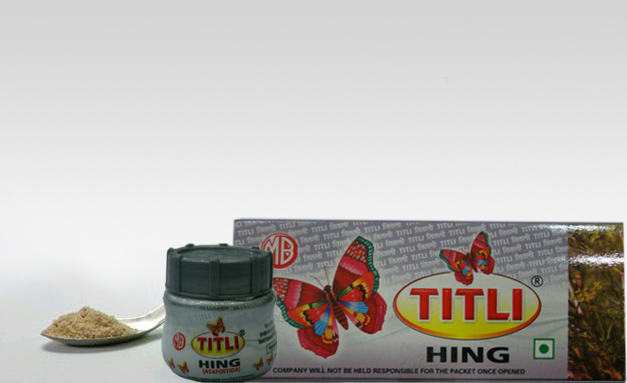
• Own brand portfolio: TITLI, Agni, Natraj, and Shivalik — four distinct hing brands serving different market segments, from household retail to industrial supply.
• Raw hing expertise: Manchanda Brothers supplies raw asafoetida resin in bulk — a niche that requires deep sourcing relationships and technical knowledge most traders don't have.
• Contract manufacturing: They offer full private label and contract manufacturing for brands that want to launch their own hing product without setting up a factory.
• Flexible supply: From 50 g retail packs to bulk industrial quantities — they scale with your business.
• Export-ready: Manchanda Brothers supplies internationally, with the documentation and packaging knowledge to handle cross-border requirements.
With direct access to the Khari Baoli trade network and their own processing infrastructure in Sonipat, Manchanda Brothers can offer what many hing manufacturers simply cannot — genuine quality control from raw material to finished product.
Common Mistakes Buyers Should Avoid When Sourcing Hing
Even experienced procurement managers make avoidable mistakes when buying from hing manufacturers. Here are the most common ones:
1. Choosing on price alone. Cheaper hing often means lower resin content, fillers, or poor-quality starch. The savings quickly disappear in customer returns and brand damage.
2. Not requesting a sample batch. Always test before you commit. A sample batch reveals consistency, aroma strength, and packaging quality — things a product photo never will.
3. Ignoring documentation. FSSAI compliance, batch records, COAs — these aren't bureaucratic extras. They protect you during audits, customer complaints, and import inspections.
4. Not visiting the facility. A manufacturer confident in their process will welcome a visit. If they're resistant or evasive, that tells you something important.
5. Assuming all compound hing is the same. Compound hing formulations vary widely in asafoetida content (anywhere from 2% to 30%+). Get the specification sheet, not just the product name.
6. Locking into a single supplier without a backup. Supply chain disruptions happen. Always qualify a secondary supplier so production continuity is never at risk.
Latest Industry Trends in Hing Manufacturing in 2026
The hing and asafoetida industry is undergoing genuine transformation. Buyers who stay ahead of these trends will source smarter:
Domestic Cultivation Is Growing — But Import Still Dominates
India has been piloting Ferula cultivation in Himachal Pradesh and Lahaul-Spiti since 2021. While commercial-scale domestic production is still years away, it signals a long-term structural shift. For now, top hing manufacturers continue to source raw resin from Central Asia — but those with strong import relationships will have a sourcing advantage as demand grows.
Clean Label and Organic Variants Are in Demand
The clean-label movement is hitting the spice industry hard. Consumers and food brands increasingly want hing products with minimal additives — no artificial colours, no wheat flour fillers (especially relevant for gluten-free formulations), and clear ingredient labelling. Forward-thinking hing manufacturers are developing cleaner compound hing variants to meet this demand.
How to Evaluate and Shortlist Hing Manufacturers:
When you're comparing multiple hing manufacturers, use this evaluation framework to structure your decision:
• Certifications: FSSAI licence (valid), ISO 9001:2015, export approvals if applicable
• Manufacturing setup: Own facility vs. third-party; ask for location and facility photos or a visit
• Product specification: Resin content percentage, fillers used, packaging types available
• Sample order: Request a minimum 2–3 batch samples before placing a bulk order
• References: Ask for 2–3 existing client references, especially those in your industry segment
• Lead time and MOQ: Understand standard lead times and what happens when you need an urgent order
• After-sales communication: How quickly do they respond to queries? Is there a dedicated account manager?
Conclusion
Finding reliable hing manufacturers is not a one-time task you tick off a procurement list. It is a relationship that directly shapes your product quality, your customer satisfaction, and your brand's reputation in the market.
The best hing manufacturers are the ones who treat your business growth as their business interest — offering consistent quality, honest communication, and the flexibility to grow with you. They bring certifications, infrastructure, and expertise to every transaction, not just a price list.
If you're looking for a manufacturing partner that checks every one of these boxes, Manchanda Brothers is worth a conversation. With decades of asafoetida expertise, an established brand portfolio, a dedicated manufacturing facility, and the capability to support everything from retail packs to contract manufacturing — they represent exactly the kind of reliable, accountable supplier that food businesses need.
Reach out to Manchanda Brothers at manchandabrothers.in or call +91-9213098988 to discuss your requirements. Bulk orders, private label, and export enquiries are all welcome.
Frequently Asked Questions (FAQs)
Q1. What is the difference between compound hing and raw hing?
Raw hing is the pure resin obtained from the Ferula plant, while compound hing is a processed blend of raw hing and other ingredients like starch. Compound hing is commonly used in households and food products.
Q2. How can I check if a hing manufacturer is FSSAI certified?
Ask for the manufacturer's FSSAI licence number and verify it on the official FSSAI website. Reputable manufacturers readily provide their certification details.
Q3. Do hing manufacturers offer private label services?
Yes, many hing manufacturers provide private label and contract manufacturing services, allowing businesses to sell hing under their own brand name.
Q4. What should I check before placing a bulk hing order?
Evaluate the aroma, colour, texture, ingredient quality, packaging details, and compliance certifications before finalizing a bulk purchase.
Q5. Which city is best known for hing manufacturing in India?
Delhi, especially the Khari Baoli market and nearby NCR regions, is one of the leading hubs for hing manufacturing, wholesale supply, and export activities in India.